GMP Services – Pharma and Biotech
What is GMP?
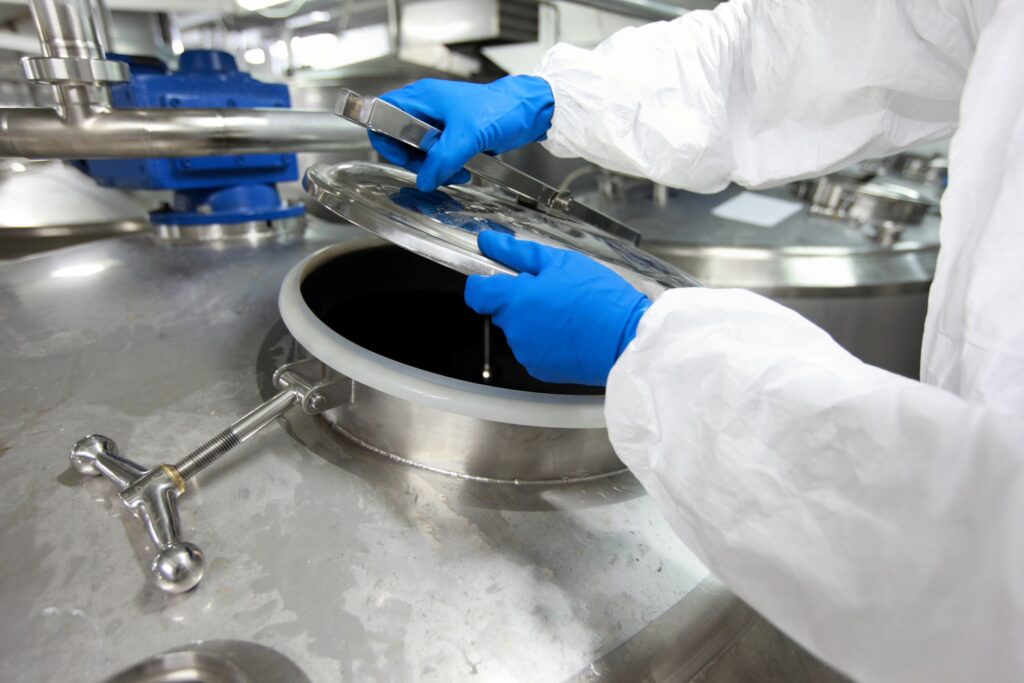
Good Manufacturing Practice (GMP) is a major quality control strategy with emphasis on the process quality. Quality alone cannot be sufficiently tested to the product.
Why is GMP important?
Manufacturers of pharmaceutical products are required to comply with Good Manufacturing Practice (GMP). The objective of GMP is to follow quality standards to ensure the safety, efficacy and quality of medicinal products.
GMP Quality Management
Audits and Inspections
- Contributing to inspection preparedness with regulatory authorities.
Technical Project Management
- Design and execution of small to mid-size investment projects with direct impact on production and business performance.
- Performing process engineering calculations and support plant optimization activities.
- Conducting feasibility studies for new installations or modifications to existing systems, cost estimation, scheduling and functional assessment.
- ATMP feasibility studies
Concept Development
- Development, design and evaluation of potential technical solutions, including assessment of advantages and limitations.
Process Optimization
- Optimizing process flows, implementing solutions and lean validation concepts to qualification and validation strategy.
Resource Management
- Coordinating and securing all required internal and external resources to ensure timely and professional project execution.
- GAP-Analysis
- Project lead and team coordination
Quality Control Activities
- Quality Compliance Consulting
- Contributing to maintenance, calibration and qualification of laboratory equipment.
- Devise and revision of GMP-relevant documents.
- Design, development and validation of analytical methods including analytical instrument qualification.
- Participating in testing of samples linked to quality control operations, validation and qualification, utility and environmental monitoring testing.
Quality Assurance Activities
- Contributing to QA activities, e.g. CAPA, Change Control, Periodic Review, SOPs and general GMP documentation.
Technology Transfer
- Concept and design of transfer projects, e.g. analytical test methods, process validation, manufacturing and production.
GMP Training
- In-house training, mentoring analytical technicians and staff in GMP and technical competencies.
History of GMP
The origin of GMP goes back to the USA of 1883, when the first recommendations for “Food and Drugs” were introduced under the direction of Harvey W. Wiley who, at that time, investigated food preservatives.
Noteworthy incidents have paved the way towards regulations and modern quality standards. Tetanus contaminated diphtheria vaccines, that caused numerous deaths, led to the Biologics Control Act of 1902. The unsatisfactory conditions of Upton Sinclair’s meat-packaging led to the Meat Inspection Act of 1907.
The Sulfanilamide tragedy followed in 1937 that caused the deaths of more than 100 people (mostly children) after using a drug that was clearly unsafe, led to the Federal Food, Drug and Cosmetic Act (FDC Act) of 1938. Last but not least, the Cutter incident in the 1950s (a failed process step of inactivating living polio virus) caused over 40.000 polio infected patients and, subsequently, the abrogation of the first mass vaccination program.
Due to failed quality controls at that time, an obviously clearly unsafe polio vaccine was used. All this has led to regulations and incorporation of quality standards into drug manufacturing and their control, that have come to be known as today’s GMP.


GMP Services
- GMP Quality Management
- Validation Services
- Qualification Services
- CSV & Data Integrity
- Quality Control Testing
- In-process Testing
- Scientific and Laboratory Assistance
- Upstream & Downstream Operations
- Technology Transfer
- Statistical Analysis
Our aim is to contribute to the implementation of GMP quality standards related to the manufacturing and control of sterile biopharmaceuticals and gene and cell-based therapy (ATMPs).
Hands-on Experience
Our validation engineers, who are well-qualified, have an understanding of pharmaceutical science, risk factors, and manufacturing processes related to biopharmaceuticals and immunotherapies, allowing us to contribute GMP expertise to your equipment qualification and validation operations.