Author: sabine.stolley

  • Process Validation

    Process Validation

    FDA Definitions

    Establishing documented evidence which provides a high degree of assurance that a specific process will consistently produce a product meeting its predetermined specifications and quality attributes.

    Process Validation

    About Process Validation

    Process validation applies to drugs such as biological or biotechnological-derived medicinal products and drug substances (active pharmaceutical ingredients). The strategy to process validation should be laid down in a process validation plan.

    Specifications, validation parameters and the associated acceptance criteria should be specified and justified based on the evaluation of the risk assessment in which critical quality attributes are linked to critical process parameters.

    Current scientific knowledge and the accumulated data collected during drug and preclinical development, quality control and manufacturing processes should be included to the validation studies.


    Objective of Process Validation

    Process validation verifies that the manufacturing process is under control and operates within defined specifications, validation parameters and the associated acceptance criteria. Process validation contributes to confidence in product and process quality and ensures compliance with GMP to receive the manufacturing authorization.

    Audits and Inspections

    Regulatory authorities have the authority and responsibility to inspect and evaluate process validation. The manufacturer is in charge to perform and implement process validation. The European Medicines Agency (EMA) represents a Guideline on Process Validation.

    Process Equipment Qualification
    Process Validation

    Bioprocessing

    Currently biopharmaceuticals and immunotherapies are being developed to fight against cancer, autoimmune disorders, infectious diseases and several other medical conditions.

    Biopharmaceuticals are proteins, mainly derived from living organisms or systems by using recombinant DNA technology. Recombinant proteins are then produced by cell expression systems.

    The basic science behind all biopharmaceuticals is the use of recombinant DNA technology. The cell consists of cell membrane, nucleus and cytoplasm. The nucleus contains the genetic information in form of the DNA. Proteins are made within the cytoplasm. So how do we get from the nucleus to the cytoplasm? The process is called the “protein biosynthesis”. It starts within the nucleus with the transcription of DNA into mRNA. The mRNA now serves as a template for the protein synthesis and moves to the cytoplasm. Here are the ribosomes, where the final protein is synthesized.

    Genes, containing the genetic information in form of DNA sequences code for proteins or have other regulatory cell functions. The cell activates only those genes, required to produce specific proteins. Nowadays, it is possible to identify the genetic sequences that control the production of these proteins. These genes are then isolated and duplicated on a large scale to produce the desired protein which is then extracted, purified and used for the production of the biopharmaceutical item, as they have come to be known.

    Bioprocess Engineering

    The main objective of bioprocess engineering is to design optimal cell culture conditions and bioreactor process parameters to achieve high yields of desired protein with high quality characteristics.

    Recombinant products are produced by living organism (e.g. mammalian cell cultures, yeast cells or bacteria). Proliferation-controlled production processes consist of an expansion phase followed by a production phase. To optimize cultivation several process strategies have been developed.

    For effective bioprocessing advances have been made in the various area of bioprocessing:

    • Process Analytical Technologies (PAT)
    • Quality by Design (QbD)
    • Cell line engineering
    • Recombinant DNA technology
    Process Validation

    Product Characterization of Biotechnological Products

    The objective of product characterization is to contribute to a better knowledge of product-biology and structure-function relationships. The biological product is characterized by its biological, physico- and immunochemical properties, and by purity and impurities. The assessment of the biological properties, however, plays a major role in establishing a characterization profile. In defining the critical product quality, these properties add quality characteristics and support product safety. Analyses are mandatory regulatory GMP requirements for release and marketing authorization according to ICH Q6B.

    Considering the complexity of biopharmaceuticals and that full product characterization is rather difficult to achieve specifications are part of quality control. Specifications are critical quality characteristics proposed and justified by the manufacturer. The objective of specifications is to ensure product and process quality in terms of consistency and compliance to good manufacturing practices (GMP). Specifications include data of product characterization studies, drug development and preclinical studies, clinical data and analytical procedures.

  • GMP Compliance Consulting


    Biological and ATMP manufacturing


    “The holder of a manufacturing authorization must manufacture medicinal products so as to ensure that they are fit for their intended use, comply with the requirements of the marketing authorization (MA) and do not place patients at risk due to inadequate safety, quality or efficacy”. (Quote EurdraLex Vol 4)

    Manufacturer of medicines for human or veterinary use, are subject to regulatory GMP requirements with regulatory authorities such as the U.S. Food & Drug Administration (FDA) or European Medicines Agency (EMA). They are legally obliged to comply with GMP.

    Compliance with Good Manufacturing Practice (GMP) states that medicinal products must be manufactured under specified quality standards to ensure the product’s safety, efficacy and quality. Compliance with GMP is mandatory for all medicinal products to receive the manufacturing authorization and applies over the product life cycle

    GMP is a major quality control strategy with emphasis on the process quality. Quality alone cannot be sufficiently tested to the product.

    Pharmaceutical products are subject to high quality standards as part of submission for regulatory approval. Among these are: reporting adverse drug reactions; monitoring clinical trials and conducting inspections of manufacturers; compliance with good clinical practice (GCP); good manufacturing practice (GMP); good distribution practice (GDP), and good pharmacovigilance practice (GVP).

    For their manufacture, distribution and marketing authorization, a manufacturing license is required. Therefore, for a drug manufacturer, the manufacturing authorization is an essential GMP property. Qualification and validation are key GMP requirements for the implementation of those quality standards. Validation operations, especially in producing sterile biopharmaceuticals, can be very challenging.

    The procedures are arduous and requires conscientiousness and commitment, knowledge and experience, as there are predetermined specifications and regulations to meet.

    GMP Regulations

    FDA statutory and regulatory GMP requirements

    Federal Food, Drug, and Cosmetic Act (FDC Act)

    The regulatory basis for Good Manufacturing Practice (GMP) is the Federal Food, Drug, and Cosmetic Act (FDC Act). The GMP requirements are codified by the FDA of the Code of Federal Regulations (CFR) Title 21 Food and Drugs parts 210 and 211:

    CFR Titel 21 Part 210 – Current good manufacturing practice in manufacturing, processing, packing, or holding of drugs; general

    CFR Title 21 Part 211 – Current good manufacturing practice for finished pharmaceuticals


    GMP Compliance for Biologicals and Medicinal Products


    About Stolley Engineering

    Currently biopharmaceuticals are being developed to fight against cancer, autoimmune disorders, infectious diseases and several other medical conditions. Biopharmaceuticals are (mostly) proteins, mainly derived from living systems such as microorganism, animal cell, or plant cell by using recombinant DNA technology.

    Proteins can be 100 to 1000 times larger than chemically synthetized small molecules. Due to their large size and complex structure, biopharmaceutical production entails complex manufacturing processes. They are highly sensitive to modification during and after production.

    The manufacturing process can affect many parameters, including amino-acid structure, side chains, post-translational processing and tertiary and quaternary structure. Changes could have a profound effect on protein function.

    Therefore, biopharmaceuticals are different from synthetic small molecules in terms of molecular size, three-dimensional shape, and process specific impurities. The formulation of the final product is distinct in terms of excipients, bioactivity and stability.

    Inconsistencies during manufacturing can lead to inter-batch variations and inconsistency of efficacy. Regarding the manufacture of biopharmaceuticals, the control of quality, safety and efficacy especially in terms of “batch-to-batch” consistency is more complex and demanding.

    The responsibility of the regulatory authorities, as part of their review, is to inspect the manufacturing process and the manufacturer’s control strategy for these product variations.


    Product Regulation


    Bioassay
    • Microbial agents
    • Tumorgenicity
    • Pyrogenicity
    GMP Compliance
    • Identity
    • Purity
    • Impurities
    • Potency
    • Quantity
    Analytical Method
    • Process Control
    • Validation Program
    • Qualification Program
    • Quality Control Tracking
    • Quality Assurance Tracking


    Biological products subject to the PHS Act are licensed under the section 351 of the PHS Act. The regulatory requirement for the BLA is defined in Code of Federal Regulations CFR Title 21 Part 601 Licensing.

    The requirements are that the product, the manufacturing process, and the manufacturing facilities meet applicable quality standards to ensure the continued safety, purity and potency of the product.

    A potency assay is required due to the complexity and heterogeneity of biotechnological-derived medicinal products.

    ATMPs

  • Computerized System Validation (CSV) – GMP Compliance

    Computerized System Validation (CSV) verifies through documented activities that the computerized systems operate within its specification and acceptance criteria as defined and specified.

    CSV

    GMP Compliance of CSV

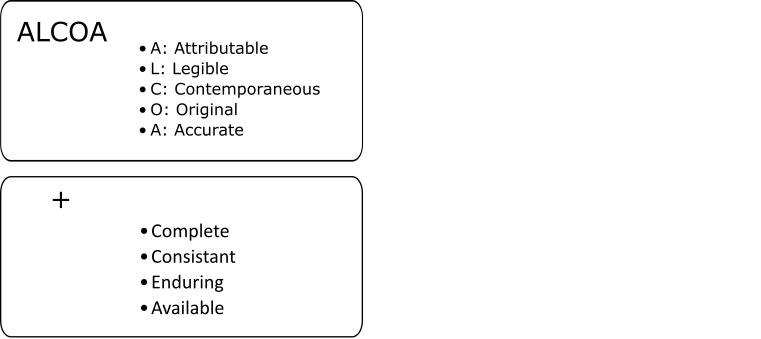
    IT-Infrastructure is subject to validation regarding a GMP-related environment. CSV principles of validation of computerized systems include GMP regulations and requirements e.g. FDA 21 CFR Part 11, GAMP, EudraLex Vol. 4 Annex 11, EudraLex Vol. 4 Annex 15, Datatype, ALCOA+ principles, and a risk-based system classification.

    About Computerized System Validation (CSV)

    Validation of computerized systems should be risk-based throughout the entire system lifecycle. A cross-functional validation team should be formed and responsibilities such as System Owners, Qualified Persons, and Process Owners clarified.

    Objective of CSV

    Manufacturing facilities, analytical instruments, devices and utilities used for quality control, drug manufacturing or drug development are nowadays mostly combined with computerized systems.

    User Requirement Specifications (URS)

    System specifications and laboratory’s requirements should be specified in the User Requirements Specification (URS). Validation specifications and the associated acceptance criteria should be established on a risk basis.

    Integrated Qualification and CSV

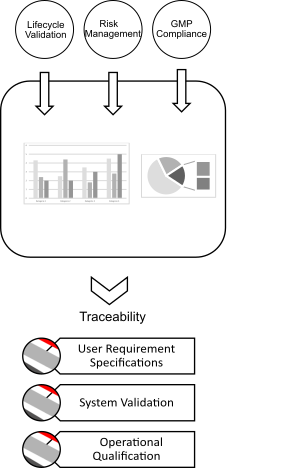
    Analytical instrument qualification and process equipment qualification follow the integrated approach which combines qualification activities (DQ, IQ, OQ, PQ) and CSV. The purpose to combine CSV and system qualification is to save time and effort.


    Data integrity, data security, testing and validation have become key elements to CSV. IT experts need to collaborate with GMP experts and laboratory technicians.ALCOA+ Principles

    9 Principles govern Data Integrity:

    ALCOA is the abbreviation for: Attributable, Legible, Contemporaneous, Original, and Accurate. This term was originated by the FDA and incorporated into the guidelines.


  • Qualification Operations

    GMP Qualification Operations – Manufacturing of Biological Products


    Analytical Instrument Qualification

    Analytical instruments and devices are essential for manufacturing and quality control of biopharmaceuticals. Most of these instruments link metrological and software-controlled functions. QA is responsible for assuring that their instruments are suitably qualified.

    The qualification of the analytical instruments verifies through documented evidence that the instrument operates within its operational and functional specifications as defined and specified.


    Process Validation

    The manufacturing of biotechnological-derived medicinal products involves several process steps from upstream to downstream operations. Various process equipment is used for the bioprocessing of biopharmaceuticals and immunotherapies. The process equipment varies from standard to complex equipment and devices used for production.

    Equipment used in a GMP-related environment should be suitable and should not present any hazard to the product. The location and installation of the equipment should be adequate to minimize risk and contamination.

    The objective of process equipment qualification is to verify the fitness for purpose for its intended use and to ensure that process equipment meet their specifications as devised in the URS.

    Process equipment qualification is the verification that the equipment is properly designed, installed and operates within specified specifications and their associated acceptance criteria.


    Integrated Qualification and Computerized System Validation (CSV)

    Most analytical instruments and process equipment are combined with computerized systems and contribute significantly to datasets. Software must be categorized and specified, computerized systems must be specified and both must be validated. GMP-regulated laboratories require data to be accurate, complete, reliable and consistent.

    Integrated Qualification

    Commissioning and Qualification

    Commissioning & Qualification (C&Q) applies Good Engineering Practice (GEP) into design and construction and GMP qualification principles to assembly, installation, testing and documentation to manufacturing systems.

    C&Q combines Good Engineering Practice (GEP), the “Standard Guide for Specification, Design, and Verification of Pharmaceutical and Biopharmaceutical Manufacturing Systems and Equipment (ASTM E2500)”, and GMP qualification principles, to establish commissioning and qualification into design, construction, assembly, installation, testing and documentation to manufacturing systems.

    Commissioning & Qualification (C&Q) focusses on the identification on critical design elements (CDEs) in terms of critical quality attributes (CQAs) and critical process parameters (CPPs) regarding product quality and safety.

    Commissioning and Qualification

    Process Facility

    Process line and process facility qualification (e.g. Sterile Fill Line Equipment) for sterile pharmaceutical manufacturing is one of the most critical assets. For aseptic manufacturing in compliance with cGMP, EU GMP Guide Annex 1, FDA guidance, and ISO 14644 principles are applicable.

    Process Validation

    Summary

    The use of qualified instruments is mandatory, as it is required by regulatory authorities such as the U.S. Food & Drug Administration (FDA) or European Medicines Agency (EMA) to receive the manufacturing authorization.

    Qualified instruments contribute to client’s confidence that the analytical instruments and process equipment used for quality control and manufacturing perform suitably according to their intended purpose.

    Analytical instruments should be qualified, calibrated, inspected and maintained at defined intervals to ensure adequate performance. The Guideline for Qualification and Validations are stated in the EU GMP Guide Annex 15.

    The URS and the risk assessment are the most important documents as they impact directly the outcome of the qualification. However, user requirements and system specifications are not necessarily defined equally between supplier and laboratory. The devise of a thorough URS is of utmost avail and influences the outcome of the qualification, as the URS is linked to the operational qualification (OQ).


  • Bioassay Validation


    GMP Regulations and Requirements of Bioassay Validation


    Bioassay

    A bioassay is a test procedure used to determine the biological activity and to verify the mode of action of a protein or advanced therapy medicinal product (ATMP), by using a biological substrate e.g. living cells, or target receptors.

    About Bioassays

    Due to the complexity of biopharmaceuticals and their complex manufacturing process, bioassays are one of the most challenging parts of your quality control program. Heterogeneity is a key issue and impact the product quality in terms of batch-to-batch consistency.

    Given these circumstances the evaluation of the biological activity belongs to one of the most challenging analyses within your bioassay procedures in terms of batch release and for commercial distribution of drug products.

    Bioassay Validation

    Types of Bioassays


    Bioassay

    Cell-based bioassay using cell lines, derived from tumors, immortalized cells or created by cell line engineering, to study the cellular response to the protein of interest. The cellular response depends on the mode of action of the desired protein.

    Such responses include cell proliferation assays, apoptosis assays, or antibody-dependent cellular cytotoxicity assays (ADCC).

    The objective of potency assays is the determination of the relative potency, in which the biological activity of an analyte is analyzed by comparing the dose-response curve to the activity of a reference standard material.

    Antibody-dependent cellular cytotoxicity assays.

    Drug receptor interactions play an important role like drug delivery, tumor metastasis, and immune response. Assay development has become a powerful tool for drug screening and target validation studies as part of drug discovery and drug development.

    Florescence activated cell sorting (FACS) and flow cytometry analysis are widely used for cell-based assays, potency or ADCC assays, to determine the biological activity and the mode of action of biological products or ATMPs.


    GMP Compliance


    Bioassay Validation

    Compliance with Good Manufacturing Practice (GMP) states that medicinal products must be manufactured under specified quality standards. Compliance with GMP is a mandatory regulatory GMP requirement for all medicinal products to obtain the manufacturing authorization.

    Compliance with GMP aims to ensure that the product, the manufacturing process, and the manufacturing facilities meet applicable requirements to ensure the continued safety, purity and potency of the product.

    A potency assay is required due to the complexity and heterogeneity of biologicals and biotechnological-derived medicinal products.

    • USP <1032>: Design and Development of Biological Assays
    • USP <1033>: Biological Assay Validation
    • USP <1034>: Analysis of Biological Assays
    • USP <111> : Design and Analysis of Biological Assays

  • Qualification Activities (DQ, IQ, OQ, PQ)


    GMP Regulations and Requirements


    Definitions

    Qualification is the verification through documented activities that an instrument, process equipment, or process facility involved in manufacturing and quality control of medicinal products is properly designed and installed and operates within predefined specifications.

    Instrument Qualification
    Analytical Instrument Qualification

    The purpose of qualifying process equipment or analytical instruments is to verify suitability for the intended use and to ensure that equipment, devices or facilities meet their specifications and the associated acceptance criteria.


    GMP

    The regulatory basis for Good Manufacturing Practice (GMP) is the Federal Food, Drug, and Cosmetic Act (FDC Act). The GMP requirements are codified by the FDA of the Code of Federal Regulations (CFR) Title 21 Food and Drugs: CFR Title 21 parts 210 and 211:

    Part 210 Current good manufacturing practice in manufacturing, processing, packing, or holding of drugs; general.

    Part 211 Current good manufacturing practice in manufacturing for finished pharmaceuticals.

    Lean GMP Validation

    The FDA requires that the medicinal product meet the safety aspects, and the identity, strength, purity, and quality specifications which it states to have, as required by section 501(a)(2)(B) of the act.

    A drug is deemed adulterated if its manufacturing, processing, packing, or holding method do not conform to cGMP to ensure safety, quality, and purity.

    (a) Section 501(a)(2)(B) of the Federal Food, Drug, and Cosmetic Act provides that a drug (including a drug contained in a medicated feed) shall be deemed to be adulterated if the methods used in, or the facilities or controls used for, its manufacture, processing, packing, or holding do not conform to or are not operated or administered in conformity with current good manufacturing practice to assure that such drug meets the requirement of the act as to safety and has the identity and strength, and meets the quality and purity characteristics, which it purports or is represented to possess.


    GMP Qualification Activities

    Qualification is part of validation. Equipment, instruments, systems, and devices are qualified, processes, procedures, and analytical methods are validated. The legal responsibility for qualified equipment lies within the manufacturer.


    GMP Qualification Phases

    Qualification is a multilevel process consisting of four main qualification phases: DQ, IQ, OQ, and PQ


    Qualification

    The Design Qualification (DQ) verifies the functional and operational specifications through documented activities and that the specified design of the process equipment, process facility, instrument or device is suitable for the intended purpose.

    The selection and purchase of a new instrument, process equipment, or process facility shall follow a documented decision process. The decision is based on the needs related to the intended purpose.

    I Planning

    • Design stage
    • URS, FS
    • System Classification
    • Risk Assessment

    II Procurement

    III Suppliers Work

    • FAT
    • SAT

    Process Equipment Qualification

    IQ verifies through documented activities that the process equipment is delivered as designed and specified, according to the URS and that the equipment is properly installed and assembled in the designated environment.

    The IQ verifies the correct implementation of the requirements defined in the design qualification (DQ) during the assembly and installation of the equipment. The verification of the installation qualification (IQ) is basically performed on the basis of the previously devised URS.

    • Conformity checks with order (instrument, material, documentation)
    • Check for damage
    • Check for required medial supply (connections, environmental conditions)
    • Check of correct instrument installation and assembly
    • Instrument delivery
    • Description
    • Utilities/Facility/Environment
    • Assembly and installation
    • Software installation, network, and data storage
    • Installation verification

    GMP Services

    OQ verifies through documented activities that the process equipment, process facility, or analytical instrument operates within its specified operational specifications and acceptance criteria as designed and installed.

    • OQ follows the IQ
    • OQ verifies the URS
    • FAT and SAT should be incorporated into testing activities to avoid retesting

    Qualification

    PQ verifies through documented activities that the process equipment, process facility, or analytical instrument operates consistently and reproducibly within predefined performance specifications and acceptance criteria under actual conditions of use.

    PQ therefore verifies the fitness for purpose of the process equipment or process facility under actual conditions of use.


    Qualification

    The user requirements refer to the laboratory needs and the technical and operational requirements of the system. The system specification describes a solution that will satisfy the needs of the users.

    Specifications must solve every part of the problem described in the requirements document and must trace back to the user requirements. Requirements and specifications must be testable.

    The URS is an essential regulatory GMP requirement. The devise of a thorough and intelligent URS is of utmost avail as the URS influences directly the outcome of the qualification activities.

    • Description of the analysis, test method, system
    • Description of the intended use of the equipment
    • Description of functional specifications
    • Description of operational specifications
    • Description of environmental specifications
    • Safety aspects

    System Classification

    To determine the extent of qualification the systems are classified into categories depending on their complexity and the criticality on its intended use.

    Group A includes the simplest standards devices and instruments such as magnetic stirrer or vortex mixer which are used without measurement capability. Their handling is simple and self-explanatory. The quality of product and process will not be affected by this category and therefore qualification activities require only the basics.

    Group B includes instruments which are more complex and provide a measurement capability or a condition that may affect a measurement, for example a pH meter and oven or incubator. These instruments may have firmware but are not software-controlled. The extent of qualification activities depends on criticality regarding critical quality attributes (CQAs) and critical process parameters (CPPs) which shall be analyzed by a risk assessment.

    Group C includes complex analytical instruments with software-controlled measurements and analysis such as HPLC, mass spectrometer or flow cytometer. This category requires the highest quality standards. Their qualification is elaborate and labor-intensive. It also includes the computerized software validation (CSV) which is even more challenging and demanding.


    Instrument Calibration

    Calibration is a test procedure to establish the relationship between the output and input variables, i.e. the measured value and the corresponding true or correct value using a reference standard to identify the deviation of a test device (e.g. test instrument, analytical instrument, system).

    Analytical Instrument Qualification

    FAT

    For complex process line or process facilities the framework is extended to include functional specifications (FS) and factory acceptance testing (FAT). FAT is performed by and at the vendor’s location. The primary objective is to ensure that the system meets the functional and operational specifications as devised in the URS. FAT may include all activities from commissioning to qualification (DQ, IQ, OQ). FAT should be incorporated into the qualification operations where possible.

    SAT

    Site acceptance testing (SAT) includes analytical instrument installation, process equipment installation and start-up which are normally undertaken in IQ and OQ. The equipment is retested when installed at the manufacturing site by the vendor. Some of the SAT activities may be satisfied and do not need to be repeated by the manufacturer. The documentation can be incorporated into the qualification process.


    CSV & Data Integrity

    Specifications are part of the laboratory controls. The quality control unit is responsible for the establishment of scientifically sound and appropriate specification standards, sampling plans, and test procedures.

    To ensure that products meet their specifications, a diverse repertoire of analytical instruments, process equipment and process facility for the production and quality control of biopharmaceuticals is required.

    Validation parameters and acceptance criteria are part of the specifications. Specifications aim to assure compliance with GMP.

    The regulatory FDA requirements are stated in the code of federal regulation 21 CFR § 211.160 General requirements.

    • Specification, validation parameters and the acceptance criteria represent the core element of any qualification or validation plan.
    • Specifications must be established before qualification or validation is performed.
    • When establishing specifications, expertise from drug development, drug manufacturing and quality control should be incorporated into validation and qualification processes.

    Qualification

    Manufacturers of biotechnological-derived medicinal products are required to follow risk-based approaches in their GMP compliance operations. Annex 15 of the EU GMP Guide states that a quality risk approach should be applied throughout the product life cycle.

    The risk assessment identifies and provides scientific knowledge about potential quality risks. Quality risks associated with biotechnological-derived products are highly dependent on the manufacturing process, the protein itself and the manufacturing facility and environment.

    The objective of risk assessment is to identify all the potential risks and to implement control and mitigation activities to minimize all the potential risks where possible.

    The assessment shall follow the impact of potential risks in terms of quality, safety and efficacy of the product as well as other risks to health, human and environment.

    The evaluation of the risk assessment should be knowledge-based on current scientific knowledge and the accumulated experience during drug development, preclinical development, quality control and manufacturing processes.

    Critical quality attributes (CQAs) and critical process parameters (CPPs) play the key role within your risk assessment..


    GMP compliance

    Qualification and validation activities are part of good manufacturing practice (GMP). The use of qualified instruments and process equipment is mandatory because it is required by regulatory authorities. The purpose of Q&V is to contribute to customers’ confidence and that the instruments and equipment perform suitably according to their intended purpose.

    Qualification and validation operations require compliance with predefined specifications and GMP regulations to ensure the quality and reliability of manufacturing processes with regard to the quality, safety and efficacy of medicinal products.

    For GMP-related environments such as the pharmaceutical industry and treatment centers for ATMPs, qualification and validation are essential GMP requirements to verify GMP compliance.


  • Lean GMP Validation Concept

    Lean GMP Validation

    The refinement and optimization of implementing GMP quality standards requires daily teamwork in different operation units and disciplines.

    Designing validation and qualification concepts, quality control, quality assurance, manufacturing and IT, work at its best closely together in qualification or validation teams.

    When we develop those validation and qualification strategies, we apply the Lean GMP Validation Concept. This helps us to follow refinement and reduction but keep to the regulatory expectations.

    For our clients, it saves time and money by avoiding unnecessary, time-consuming, and costly validation and qualification activities. In regular project meetings, we develop and optimize the approach on implementation of qualification and validation concepts.

    Our validation engineers are equipped with mind and reason to establish the objectives of your validation and qualification strategy.

    Objective

    Lean GMP validation aims to emphasize on an effective and efficient validation or qualification strategy to avoid time-consuming and costly Q&V activities.

    Analytical Instrument Qualification
    GMP compliance

    Risk Assessment

    Emphasize your qualification and validation strategy risk-based and focused on critical quality attributes (CQAs) and critical process parameters (CPPs).

    Lean Validation Strategy

    • Form interdisciplinary validation team
    • Define precisely the validation activities
    • Devise precisely the User Requirements Specification (URS)
    • Incorporating of SAT and FAT
    • Precisely specify documentation
    Instrument Qualification
    Lean GMP Validation

    Summary

    When establishing the validation strategy remain focused and use common sense to establish the validation and qualification objectives.

    Keep to the Lean Validation Strategies. This helps you to avoid costly and time-consuming retesting.

    Precisely define your validation activities. Devise an intelligent URS and risk analysis. Avoid retesting where possible. Make the documentation as lean as possible.